ALRUD Study 2.0: The Number of Personal Foundations Has Tripled Over the Year, and Founders Are Ready to Transfer Up to 50% of Their Wealth
23 April 2026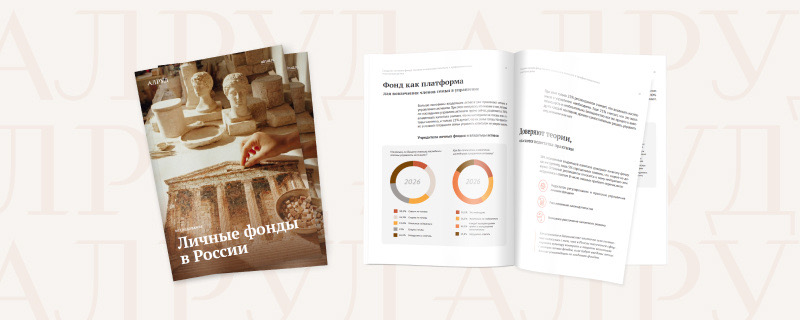
ALRUD Private Clients Practice has conducted a new study of personal foundations in Russia. The study follows the initial report published in April 2025 and includes an analysis of data on foundations established between March 2022 and early April 2026. The firm’s lawyers analyzed the annual dynamics of personal foundation usage along with ALRUD survey results from stakeholders involved in their establishment and administration.
The study participants included founders of personal foundations and asset owners that consider establishing such foundations, heads of their family offices, and professional market participants, including representatives of banks, advisors, notaries, and lawyers.
Developments Over Four Years of Personal Foundations in Russia
The Russian personal foundation market has entered a phase of active growth. As of early April 2026, more than 570 foundations are registered in the Unified State Register of Legal Entities (EGRUL), which is three times higher than a year earlier. Approximately 73% of all foundations are concentrated in Moscow and St. Petersburg, although regional expansion is ongoing.
Data on foundation management indicates that the market still remains largely non-institutional, with a strong founder-centric structure: in 82% of personal foundations, the functions of the sole executive body are performed by individuals, while in 16% management has been delegated to management companies. Such companies are primarily engaged in Moscow and the Moscow Region, as well as in St. Petersburg and the Leningrad Region.
Changes have also occurred in asset structure. Despite a threefold increase in the total number of foundations, the share of foundations holding participatory interests in limited liability companies (LLCs) has decreased from 29% to 19%. The growing popularity of this instrument is accompanied by an increasing share of registration-related risks. The analysis of publicly available sources revealed markers of unreliability in EGRUL records for certain foundations (including incorrect addresses, unreliable information on governing bodies, and lack of actual presence at the registered address), although the proportion of such issues remains insignificant.
The personal foundation market has entered the stage of mass adoption, and the key task now is to ensure a stable legal environment so that regulatory specifics and technical errors do not hinder founders in achieving their objectives. At present, infrastructure development (law enforcement practice, structuring standards, and tax certainty) is lagging behind the pace of market growth.” Kristina Goncharova, Senior Associate, ALRUD Private Clients Practice
Personal Foundations in Civil Circulation: Overview of Case Law
The volume of litigation involving personal foundations is also increasing. In 2023–2024, 7 publicly available disputes involving personal foundations were recorded; in 2025–2026, this number rose to 23. The primary risks are concentrated in tax matters, foundation governance, and real estate transactions.
At this stage, these disputes are predominantly “external”, including claims by tax authorities (40%) and property-related claims (32%). Judicial liquidation of foundations has also emerged in practice, confirming that this structure is not irreversible.
Meanwhile, more complex categories of disputes typical for mature legal institutions — such as beneficiary disputes, intra-corporate conflicts, or disputes involving heirs or governing bodies — have not yet developed.
Despite the fact that the assets of the largest foundations amount to hundreds of millions and, in some cases, tens of billions of rubles, the legal environment remains largely reactive. Regulation is significantly based on soft law, including interpretative letters issued by the Ministry of Finance and the Federal Tax Service, addressing specific issues on a case-by-case basis.
Judicial practice is already providing important guidance. This confirms the special status of the instrument: it is intended exclusively for the preservation and growth of private capital. The robustness of the institution will be tested over time, as practice evolves from disputes ‘around’ foundations on operational matters to beneficiary disputes, disputes between heirs, and cases involving subsidiary liability.” Kira Egorova, Counsel, ALRUD Private Clients Practice
Establishment of Personal Foundations: Perspective of Wealth Owners and Market Professionals
To assess how attitudes toward personal foundations have evolved, ALRUD conducted a survey among founders of existing foundations and individuals considering establishing one, as well as heads of their family offices (43% of respondents) and professional advisors, including representatives of banks, advisors, notaries, and lawyers (57% of respondents).
Among respondents, 37% have already established a personal foundation. Of all asset owners surveyed, 5% have initiated the process of establishing a foundation, and another 5% are considering it. For 26% of respondents, assets range from RUB 1 billion to RUB 10 billion, while 32% report assets exceeding RUB 10 billion.
The level of trust in personal foundations among respondents has reached 36%. However, owners choose a cautious approach: they are not prepared to transfer more than half of their wealth to a foundation. Nevertheless, diversification trends are evident, with founders contributing cash, shares, residential real estate, and trademarks.
The new study also reveals a shift in founders’ motivations. Last year, personal foundations were largely perceived as instruments for tax optimization (33% in 2025) and as a technical means of providing family members with access to funds during the inheritance process (67% in 2025). Currently, no founders identify taxation as the primary objective, although 12% of advisors note that the tax regime remains a driver for their clients.
Concurrently, nearly all respondents who have already established a personal foundation report that it has effectively addressed succession planning (86%), compared to only 30% the previous year.
Survey results also highlight founders’ assessment of their heirs’ ability to manage assets. No respondent expressed confidence that their family is fully prepared to manage the business at present. This positions the personal foundation as a “soft transition” mechanism and a platform for educating heirs, allowing for a separation between professional management and entitlement to income.
“It can be said that Russia has entered a period of conscious consolidation, structuring, and managed succession of private capital. Personal foundations are playing a significant role in this process, becoming an increasingly in-demand instrument. At the same time, trust in personal foundations as a legal institution has not yet been fully established. Legislative gaps remain, and judicial practice is still limited. In parallel with the development of institutional infrastructure, asset owners are increasingly adopting a more systematic approach to wealth management and the preparation of heirs.” Maxim Alekseev, Senior Partner, Head of ALRUD Private Clients Practice
The study also provides practical recommendations for founders aimed at minimizing risks and enhancing the efficiency of personal foundations.
The full version of the study (in Russian language) is available upon request by completing the form below.